To become a licensed private investigator in Ohio, you need a Class B license issued by the Ohio Department of Public Safety’s Private Investigators & Security Guard Services (PISGS) division. Requirements include two years (4,000 hours) of investigative experience, a criminal background check, a passing score on a written exam, and proof of liability insurance. A criminal justice degree may substitute for up to half the experience requirement, subject to PISGS approval.
Ohio’s three major metros — Cleveland, Columbus, and Cincinnati — generate steady demand for private investigative work, from corporate due diligence and insurance fraud cases to domestic investigations and missing persons work. The state has a well-defined licensing process administered by a single agency, making it more straightforward than in some states where multiple bodies share oversight.


Private investigator licenses in Ohio are issued by the Private Investigators & Security Guard Services (PISGS) division of the Ohio Department of Public Safety. Under Ohio Revised Code Chapter 4749, a private investigator is anyone who engages in the private investigation business, which includes investigating crimes or threats of crime, obtaining information on a person’s identity, conduct, habits, affiliations, or whereabouts, locating lost or stolen property, determining the cause of property damage or accidents, or securing evidence for use in legal or administrative proceedings.
It takes just a handful of steps to get licensed.
 | Meet Ohio’s Eligibility Requirements |
 | Complete Your Education and Experience Requirements |
 | Submit Your Application |
 | Pass the Ohio PI Exam |
 | Start Your Career as a Licensed Ohio PI |
Step 1. Meet Ohio’s Eligibility Requirements
Ohio issues a Class B license to individual private investigators. The Class A license is for PI agencies — many investigators obtain a Class B license first before pursuing a Class A. To qualify for a Class B license, you must:
- Have a good reputation for integrity
- Not have been convicted of a crime of moral turpitude, including any sexually oriented offense, aggravated murder, murder, or a first- or second-degree felony involving violence
- Not have been convicted within the past three years of any felony that would affect your ability to work as a PI
- Not have been found incompetent to hold the license
If you have a felony conviction within the past three years that is not a crime of moral turpitude and not a directly disqualifying offense, you may be able to petition the Director for a waiver. This is evaluated on a case-by-case basis — it’s not automatic, but it’s an option worth exploring if your record is otherwise clean.
Step 2. Complete Your Education and Experience Requirements
Ohio requires two years of investigative experience — a minimum of 4,000 hours — before you can apply for a Class B license. This hands-on requirement exists because PI work involves legal exposure, surveillance law, and real-world judgment that classroom training alone can’t replicate.
That said, Ohio gives you several pathways to meet it. Prior work as a law enforcement officer, military police, or peace officer qualifies directly. A criminal justice degree or related education may substitute for up to half of the required investigative experience, subject to PISGS approval — potentially reducing the requirement to 2,000 hours. Formal education paired with part-time investigative work can get you to licensure faster than fieldwork alone.
Armed PI Training
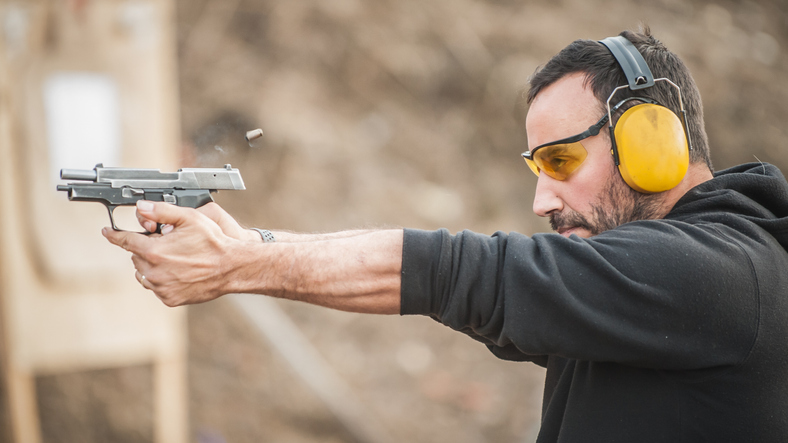
If you plan to carry a firearm on the job, Ohio requires 20 hours of handgun training at a school approved by the Ohio Peace Officer Training Commission. Carrying a different type of firearm adds another 5 hours. You’ll need to provide proof of successful completion with your application and notify the Director of your intent to carry. This isn’t optional paperwork — PISGS takes the armed endorsement seriously, and the training requirement is firm.
Step 3. Submit Your Application
Applications are submitted to PISGS through the Ohio Department of Public Safety website. Along with the completed application form, you’ll need to provide:
- A recent full-face photograph
- Character references from at least five reputable citizens
- Fingerprints for a criminal background check, submitted directly to the Superintendent of the Bureau of Criminal Identification and Investigation
You’ll also need to submit proof of liability insurance and pay the application fees. The insurance minimums and fees are laid out in the table below. Fees and insurance minimums are subject to change by the Ohio Department of Public Safety — confirm current amounts with PISGS before applying.
| Requirement | Amount | Notes |
|---|---|---|
| Examination fee | $25 | Paid at time of application |
| License fee | Up to $375 | Refundable if license is not issued |
| Liability insurance — per investigator | $100,000 minimum | Must provide proof with application |
| Liability insurance — bodily injury per occurrence | $300,000 minimum | Must provide proof with application |
| Liability insurance — property damage | $100,000 minimum | Must provide proof with application |
Step 4. Pass the Ohio PI Exam
After PISGS processes your application, they’ll notify you of your exam date and location. Attendance is mandatory — unless you provide a doctor’s certificate proving illness, or can show that appearing would cause undue hardship, you’re expected to show up on the scheduled date.
The written exam covers Ohio Revised Code Chapter 4749 — the state’s regulations governing the private investigation business — along with other relevant aspects of PI work. Applicants should confirm the current exam format and passing requirements directly with PISGS, as these details can change.
Step 5. Start Your Career as a Licensed Ohio PI
Once you pass the exam and receive your license, you’re cleared to work as a private investigator in Ohio. You’re required to keep detailed records in English of all business transactions relevant to Chapter 4749, and to make those records available to the Department of Public Safety upon request. Sloppy recordkeeping is the kind of thing that trips up otherwise good investigators — build that habit early.
PI licenses in Ohio renew annually for $275. Keep that renewal date on your calendar — a lapsed license is a liability, not just an inconvenience.
Consider joining the Ohio Association of Security & Investigation Services (OASIS) to stay current with industry developments and connect with other licensed PIs in the state. Referral networks matter in this business. Much of the caseload comes from relationships with attorneys, insurance adjusters, and other investigators, and OASIS is a practical starting point for building those connections.
Licensing requirements can change. Confirm current requirements directly with PISGS before beginning your application.
Private Investigator Salary in Ohio
According to the Bureau of Labor Statistics, private investigators in Ohio earned a median annual salary of $50,060 as of May 2024. The mean (average) annual salary was $56,050, and investigators in the top 25% earned $68,710 or more per year. The state employs approximately 1,360 licensed PIs.
Job growth projections from the BLS show Ohio PI employment rising from 1,710 to 1,790 positions between 2022 and 2032 — a 4.7% increase — with an average of 170 job openings per year. That figure includes both new positions and openings from investigators who retire or leave the field.
PI Salaries by Metro Area in Ohio
Earnings vary across Ohio’s major cities. Cincinnati and Cleveland tend to lead on salary, while smaller metros like Toledo and Dayton skew lower. The table below shows median, 75th percentile, and 90th percentile annual wages, along with approximate employment, for each metro area, based on May 2024 BLS data. Employment figures for smaller metros are estimates and may reflect BLS rounding.
| Metro Area | Median Annual Salary | 75th Percentile | 90th Percentile | Approx. Employment |
|---|---|---|---|---|
| Akron | $53,190 | $71,460 | $81,860 | 50 |
| Cincinnati | $56,660 | $73,130 | $96,570 | 250 |
| Cleveland | $57,030 | $69,640 | $72,870 | 270 |
| Columbus | $46,810 | $67,230 | $81,720 | 220 |
| Dayton | $51,110 | $59,620 | $71,650 | 70 |
| Toledo | $39,080 | $45,800 | $64,730 | 40 |
Cleveland leads on median salary among the big metros, with Cincinnati close behind. Columbus shows the widest spread — median pay is lower than in Cleveland or Cincinnati, but the 90th percentile is strong, suggesting experienced investigators in the Columbus market can do well once they’ve built a client base.
Frequently Asked Questions
What’s the difference between a Class A and Class B PI license in Ohio?
A Class B license is issued to individual private investigators and is what most people pursuing a PI career in Ohio need. A Class A license is for PI agencies — businesses that employ or contract other investigators. Many investigators obtain a Class B license first before pursuing a Class A, though Ohio’s requirements for each license type are separate. Confirm current Class A requirements with PISGS.
Can a criminal justice degree substitute for the experience requirement?
Possibly. Ohio allows a criminal justice degree or related education to substitute for up to half of the required investigative experience, subject to PISGS approval — potentially reducing the requirement to 2,000 hours. You’ll need to provide official transcripts as proof of the degree when you apply.
How long does it take to get an Ohio PI license?
Timeline depends on application completeness, background check processing, and exam scheduling. Getting your fingerprints, insurance proof, and character references organized before you submit is the best way to avoid delays. Contact PISGS directly for current processing time estimates.
Does Ohio have reciprocity with other states for PI licensing?
Ohio does not have formal reciprocity agreements with other states. Out-of-state investigators seeking to work in Ohio must apply for an Ohio Class B license and meet all standard requirements. If you’re already licensed elsewhere, your prior experience can count toward Ohio’s 4,000-hour requirement — but you’ll still need to pass the Ohio exam and meet all other application criteria.
Do I need a license to work as a PI employee in Ohio, rather than independently?
Individuals performing licensed investigative work in Ohio may need a Class B license even when employed by a licensed agency. Ohio distinguishes between licensed investigators and certain employee roles under agency supervision. Applicants should confirm current requirements with PISGS before assuming a Class A agency license covers the individuals working under it.
Key Takeaways
- One licensing body. PISGS at the Ohio Department of Public Safety handles all PI licensing in the state. There’s no local or county-level licensing overlay.
- 4,000 hours of experience required. A criminal justice degree or related education may substitute for up to half, subject to PISGS approval. Law enforcement and military police experience also qualifies directly.
- Written exam is mandatory. The exam covers Ohio Revised Code Chapter 4749 and related investigative practices. PISGS schedules the exam after your application is processed. Confirm current format and passing score requirements with PISGS.
- Liability insurance is non-negotiable. You must have coverage in place before you can be licensed. Minimums are $100,000 per investigator, $300,000 per occurrence for bodily injury, and $100,000 for property damage.
- Annual renewal at $275. Licenses don’t auto-renew. Keep the date tracked and don’t let it lapse.
- Armed PI endorsement requires OPOTA-approved training. That’s 20 hours for handguns, plus 5 additional hours for other firearms. Notify the Director if you plan to carry.
Ready to take the first step toward your Ohio PI license? A criminal justice degree may reduce your experience requirement and strengthen your application.
May 2024 US Bureau of Labor Statistics salary and job market figures for Private Detectives and Investigators reflect state and national data, not school-specific information. Conditions in your area may vary. Data accessed May 2026.