
To become a licensed private investigator in Hawaii, you need a high school diploma or GED, four years of qualifying investigative experience, a clean background check, and a passing score on the state written exam. You can work under a licensed PI agency without holding your own license while you build that experience.
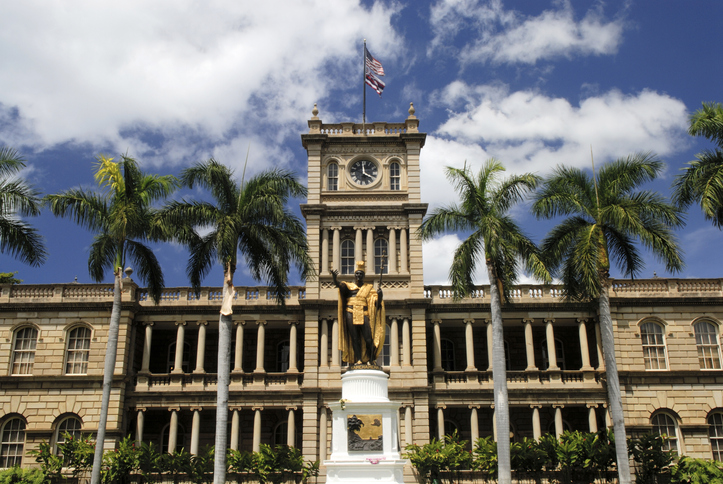
Hawaii is a small PI market. It’s a real one, and the Board of Private Detectives and Guards takes licensing seriously. Whether you’re looking to work under an established agency while you build your resume, or you’re ready to hang out your own shingle, there’s a clear path for both. What it takes is qualifying experience, a clean record, and a working knowledge of Hawaii PI law.


 | Meet the Basic Qualifications in Hawaii |
 | Education and Experience Requirements in Hawaii |
 | Working for an Agency or for Yourself |
 | Licensing Fees and Staying Current |
The Bureau of Labor Statistics counted roughly 60 working PIs statewide as of May 2024, with about 50 of them in the Urban Honolulu metro area. That concentration means Honolulu is where most PI work happens, and where most agency relationships get built. PI careers in Hawaii tend to center on insurance investigations, legal support, and corporate due diligence. With the right background and a reputation for clean, reliable work, you can get onto the call lists of the attorney’s offices, insurance companies, and corporate clients that drive steady investigative work in the islands.
Step 1. Meeting the Basic Qualifications in Hawaii
To be registered or licensed as a private investigator in Hawaii, all applicants must meet the following minimum requirements under Hawaii Revised Statutes Chapter 463:
- Be at least 18 years old
- Be a U.S. citizen, U.S. national, or alien authorized to work in the United States
- Not presently suffering from any psychiatric or psychological disorder that is directly related and detrimental to performance in the profession
- Have no criminal convictions in any jurisdiction that reflect unfavorably on your fitness to work as a private investigator, unless the conviction has been annulled or expunged by court order
- Have a personal and financial history of honesty, truthfulness, and fair dealing
Step 2. Education and Experience Requirements in Hawaii
Hawaii requires a high school diploma or GED at a minimum. Beyond that, what you need depends on which licensing track you’re on: working as a registered employee under a licensed agency, or obtaining your own PI license to work independently or run your own practice.
To qualify for your own PI license, you need four years of full-time experience in one of the following roles:
- Police officer
- Government investigator at any level (federal, state, county, or municipal)
- Investigator working for an attorney or law firm
- Private investigator working under the direct supervision of a licensed detective
Military experience documented by a DD-214 or a notarized statement from your Commanding Officer may also be considered. If your background doesn’t fit neatly into one of the four categories above, contact the DCCA directly to discuss how the Board evaluates equivalent experience.
Competitive Education
Whether you plan to work for an agency or eventually run your own, a solid educational background in a relevant field makes you a more effective investigator and a stronger candidate when pursuing positions with established agencies.
Hawaii has campus and online programs in areas directly relevant to PI work, including:
- Criminal Justice
- Crime Scene Investigation
- Law
- Criminal Psychology
- Law Enforcement
Step 3. Working for an Agency or Running Your Own Practice
Hawaii’s licensing system has two distinct tracks. Understanding which one applies to you saves a lot of confusion early on.
Track 1: Registered employee under a licensed agency. If you have not yet met the four-year experience requirement, you can still work in an investigative capacity by being registered as an employee of a licensed detective agency. No personal PI license is required. Your hiring agency registers you with the Board of Private Detectives and Guards by submitting an employee list twice a year, by July 31st and January 31st. You’ll need to complete a fingerprint and background check through Fieldprint, Inc. as part of the process.
Track 2: Licensed PI (sole proprietor or agency owner). Once you meet the experience requirement, you can apply for your own PI license and work independently or open your own agency. This requires passing a state-written exam in addition to the background check and documentation requirements.
The State Written Exam
The exam covers Hawaii PI law and business practices, drawing from Hawaii Revised Statutes chapters 463, 463b, 703, and 396, and Hawaii Administrative Rules Title 16 Chapter 97. A passing score is 75% or higher. The exam fee is $50, submitted as a separate check made payable to “Commerce & Consumer Affairs.”
The DCCA publishes a study materials list on its website, which includes The Process of Investigation by Sennewald and Tsukayama, along with references to the relevant statutes and administrative rules. Check the DCCA’s Professional and Vocational Licensing page for the current exam schedule. Exam registration is handled as part of your license application.
Familiarize yourself with Hawaii law that applies to your practice, and consider checking with the Hawaii Legislature for any statutory updates affecting the PI profession. For a side-by-side look at how Hawaii compares to other states, see the PI license requirements by state guide.
Step 4. Licensing Fees and Staying Current
If you’re working as a registered employee under a licensed agency, your ongoing obligation is straightforward: keep a clean record and stay out of any conduct that could reflect negatively on your fitness to work in the profession.
If you hold your own license as a sole proprietor or agency owner, the following fees apply. Initial license fees vary based on when in the renewal cycle your license is issued. Verify the current schedule at cca.hawaii.gov/pvl before submitting your application.
| Fee Type | Amount | Notes |
|---|---|---|
| Application fee | $50 | Non-refundable, paid by separate check |
| Exam fee | $50 | Paid by separate check from application fee |
| Biennial renewal, Private Detective (active) | $344 | Due June 30 every even-numbered year |
| Biennial renewal, Private Detective Agency (active) | $408 | Due June 30 every even-numbered year |
| Surety bond (all licensees) | $5,000 minimum | Required at initial application and maintained continuously |
Private Detective licenses renew on a biennial cycle, due by June 30 of every even-numbered year (next deadline: June 30, 2026). Renewal requires payment of the renewal fee, disclosure of any criminal convictions or psychiatric treatment since your last renewal, and evidence of a current bond. There is no continuing education requirement for Private Detective license renewal.
Current renewal fees per the DCCA: Private Detective active status $344. Private Detective Agency active status $408. Initial license fees vary depending on when in the renewal cycle your license is issued. Check the current schedule at cca.hawaii.gov/pvl before applying.
Agency licenses require a separate application (form PDG-03) and must designate a principal detective who is fully licensed and directly responsible for managing the agency’s investigative work. If you’re setting up a detective agency rather than operating as a sole proprietor, you’ll file two separate applications: one for your individual PI license and one for the agency entity.
For questions about the application process, exam schedule, or current requirements, contact the DCCA Professional and Vocational Licensing Branch directly at (808) 586-3000, or visit the board’s page at cca.hawaii.gov/pvl.
Private Investigator Salary in Hawaii
Hawaii had approximately 60 working private investigators as of May 2024, according to the Bureau of Labor Statistics, a small workforce by any measure. About 50 of those are concentrated in the Urban Honolulu metro area, where the bulk of insurance, legal, and corporate investigative work is handled.
BLS data puts the median annual salary for Hawaii PIs at $44,390 as of May 2024. The top 25% of earners in the state reach $67,250 or more, and the top 10% hit $80,170. Urban Honolulu figures track closely with the statewide median, with slightly higher earnings at the upper end.
| Location | Median Annual Salary | 75th Percentile | 90th Percentile |
|---|---|---|---|
| Hawaii (statewide) | $44,390 | $67,250 | $80,170 |
| Urban Honolulu, HI | $44,390 | $69,780 | $83,380 |
| National | $52,370 | $75,310 | $98,770 |
Hawaii’s median falls below the national figure, which reflects the state’s small PI market and the agency-based structure of most work here. State-level projections through 2032 show a stable employment picture, with approximately 15 average annual openings.
Frequently Asked Questions
What’s the difference between a registered employee and a licensed PI in Hawaii?
A registered employee works under the supervision of a licensed detective agency and does not hold a personal PI license. The agency registers you with the Board of Private Detectives and Guards twice a year. A licensed PI holds their own credentials, can work independently, and, as a sole proprietor or agency owner, takes clients directly. Getting your own license requires four years of qualifying experience and a passing score on the state written exam.
Do I need a license to work for a PI agency in Hawaii?
No. You can work in an investigative capacity for a licensed Hawaii PI agency without holding your own PI license, as long as the agency registers you with the Board. You’ll still need to complete a background check through Fieldprint, Inc. and meet the basic eligibility requirements.
What does the Hawaii PI written exam cover?
The exam tests knowledge of Hawaii PI law and industry practice, specifically Hawaii Revised Statutes chapters 463, 463b, 703, and 396, and Hawaii Administrative Rules Title 16 Chapter 97. A passing score of 75% or higher is required. The DCCA publishes a recommended study list that includes The Process of Investigation by Sennewald and Tsukayama, along with references to the relevant statutes.
How long does it take to get a Hawaii PI license?
Most applicants should plan for at least 60 to 90 days from submitting a complete application to receiving approval. Getting your documentation together ahead of time (proof of experience, background check, surety bond, and exam registration) is the most reliable way to avoid delays. Incomplete applications will push the timeline out further.
When do I need to renew my Hawaii PI license?
Private Detective licenses renew on a biennial cycle, due by June 30 of every even-numbered year. The next deadline is June 30, 2026. Renewal requires payment of the renewal fee, disclosure of any new convictions or psychiatric treatment since your last renewal, and a current surety bond. Unlike the guard employee registration, there is no continuing education requirement for Private Detective license renewal. Licenses not renewed by the deadline are forfeited, and forfeited licenses can be restored within one year. After that, you’d need to apply as a new applicant.
Key Takeaways
- Two licensing tracks. You can work as a registered employee under a licensed agency without your own PI license, or obtain a solo/agency license after completing the four-year experience requirement.
- Four years of qualifying experience are required for licensees. Accepted backgrounds include law enforcement, government investigation, attorney/law firm work, and supervised PI experience. Military training may count at DCCA’s discretion.
- Written exam required for your own license. A passing score of 75% is needed. The DCCA publishes study materials covering the relevant statutes and rules. Exam registration is part of the license application.
- Biennial license renewal. Private Detective licenses are renewed by June 30 every even-numbered year (next: June 30, 2026). Renewal requires the renewal fee, a current bond, and disclosure of any new convictions. No CE requirement for PD licenses.
- Small, stable market centered in Honolulu. Hawaii has roughly 60 active PIs statewide, with about 50 in Urban Honolulu. State projections through 2032 show approximately 15 average annual openings.
- Salary below the national median. Hawaii PIs earned a median of $44,390 as of May 2024, compared to $52,370 nationally. Top earners in Honolulu reach $83,380 at the 90th percentile.
Ready to build your PI qualifications? Browse criminal justice and investigation programs in Hawaii to find the right fit for where you want to take your career.
May 2024 US Bureau of Labor Statistics salary and job market figures for Private Detectives and Investigators reflect state and national data, not school-specific information. Conditions in your area may vary. Data accessed May 2026.