To become a licensed private investigator in North Carolina, you need to be at least 18 years old, hold a high school diploma or GED, and document 3,000 hours of qualifying investigative or law enforcement experience within the past ten years. Applications go to the NC Private Protective Services Board. There’s no written exam. Processing takes two to four months.
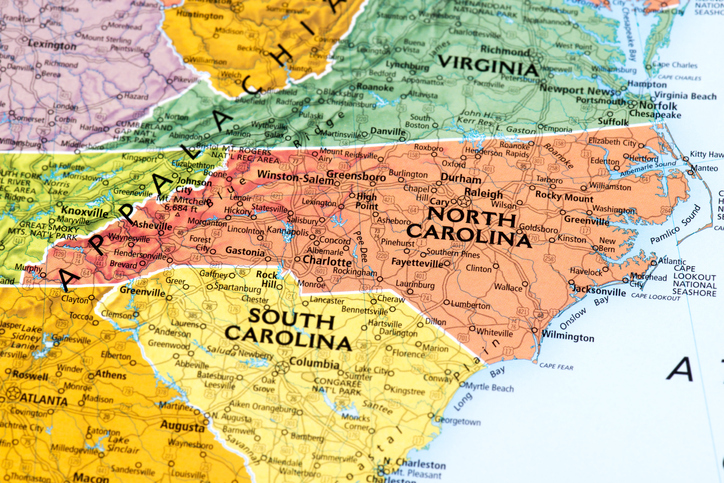
From coastal towns where infidelity cases play out against a backdrop of vacation rentals, to the metros of Charlotte and Raleigh, where insurance fraud and corporate investigations keep investigators busy year-round, North Carolina has a steady demand for licensed PIs. The licensing process is more straightforward than in many states; there’s no written exam, and the salary picture in Charlotte ranks among the best in the Southeast.


Private investigators here work a wide range of cases — domestic surveillance, insurance fraud, corporate due diligence, missing persons, and legal support investigations. North Carolina’s mix of urban metros and rural terrain creates demand across the state, not just in the major cities.
If you’re considering a career in private investigations here, the path is well-defined. North Carolina’s licensing is run through the Private Protective Services Board (PPSB), administered by the NC Department of Adult Correction. The state statute governing PIs is NC GS 74-C. Here’s how it works.


North Carolina’s private investigator statute (NC GS 74-C) defines a PI as anyone who contracts out investigative services involving any of the following:
- Investigating crimes or wrongs against the U.S. or its states or territories
- Determining the details of any person’s business, personal dealings, or character
- Locating, recovering, or tracing stolen or lost property
- Determining the cause or responsibility for fires, accidents, injuries, damages, or libels
- Securing evidence for use before a court, officer, board, or investigative committee
- Protecting individuals from death or serious bodily harm
Step 1. Meet North Carolina Requirements to Obtain a License
To qualify for a private investigator license in North Carolina, you must meet the following baseline requirements:
- Be at least 18 years old (21 to carry a firearm while working)
- Hold a high school diploma or GED
- Be a U.S. citizen or resident alien
- Be of good moral character with no disqualifying criminal convictions
- Have an acceptable credit history
The experience requirement is the big one: you need 3,000 hours of qualifying investigative experience within the past ten years. Acceptable experience includes time with a licensed private investigator or agency, a law enforcement or government agency in an investigative capacity, U.S. Armed Forces intelligence or counterintelligence work, or performing investigative work for an attorney or legal firm.
Not there yet on hours? North Carolina has a separate PI Associate license that lets you start working before you’ve accumulated the full 3,000 hours. You’ll need a licensed NC PI or agency willing to sponsor you, and you’ll work under their supervision while you build the experience needed for a full license. It’s the most direct entry point for career changers who are new to investigative work.
Step 2. Obtain the Necessary Education and Training in North Carolina

North Carolina doesn’t require a specific PI training course or certification exam to get licensed — a distinction that sets it apart from several other states. What it does require is documented experience. A criminal justice degree won’t substitute for that experience directly, but it can reduce the number of hours you need to qualify, and it gives you a real foundation for the analytical side of investigative work.
The degree credit system works like this:
| Degree Level | Hours Credited Toward 3,000-Hour Requirement |
|---|---|
| Associate’s degree | 400 hours |
| Bachelor’s degree | 800 hours |
| Graduate degree | 1,200 hours |
So, a bachelor’s degree in criminal justice, forensic science, or a related field effectively takes almost a year off your experience clock. That’s not nothing, especially for someone transitioning from an unrelated field.
If you plan to carry a firearm while working, you’ll need to complete the training required for armed security guards under 12 NCAC 07D .0807. The classroom instruction required covers four areas: The Security Officer in North Carolina, Legal Issues for Security Officers, Emergency Response, and Communications.
Specialties Worth Considering
Once you’re licensed, the direction you take the work is up to you. North Carolina’s mix of large metros and rural terrain makes it viable for a range of specialties. Surveillance is the bread and butter for most independent investigators, especially domestic cases involving custody disputes, cohabitation, and infidelity. Insurance fraud investigation keeps investigators busy in both urban and suburban markets. Corporate investigators and those with digital forensics backgrounds tend to cluster in Charlotte and the Research Triangle. Technical Surveillance Countermeasures (TSCM) is a niche that commands strong billing rates for those who build the expertise.
Step 3. Submit Your North Carolina Application
Applications go to the NC Private Protective Services Board. Plan for a two-to-four-month processing window; the PPSB conducts an extensive background investigation on every applicant. Getting your documentation in order before you submit is the most reliable way to avoid delays.
You’ll need to submit the following:
- Completed application (armed or unarmed)
- Fingerprint authorization card
- Head-and-shoulders photograph taken within the past six months, emailed to [email protected], named in this format: LastName.FirstName.MiddleName.Last4SSN.LicenseType.jpg
- Credit check from Equifax, run within the past 30 days
- Proof of education (diploma, GED, or college transcript)
- Criminal record check for each county of residence in the past 60 months, from the Clerk of Court or an approved online vendor
- DD214 (if applicable)
- Release of record form, signed and notarized
- Signed SBI Release of Records information form
- Personal reference questionnaires completed by each reference
The current fee schedule for a standard PI license is as follows:
| Fee | Amount |
|---|---|
| Application fee | $150 |
| Fingerprint check | $38 |
| License fee (if approved) | $550 |
| Renewal fee | $500 |
For armed PI registration, also submit a financial liability insurance certificate and a certificate of completion covering both unarmed training and firearms training.
Questions about the application process can be directed to the PPSB at 919-788-5320.
Reciprocity
North Carolina has reciprocal licensing agreements with several states. Under these agreements, a licensed PI from a reciprocal state can enter North Carolina for up to 30 days to work a case that originated in their home state — no NC license required for that limited window. Tennessee is the exception: the limit there is 15 days. The same applies in reverse: licensed NC investigators can follow a case into reciprocal states for the same period. If a case is going to run longer than the allowed window, you’ll need to hand it off to a licensed investigator in that state. Check the PPSB website for the current list of reciprocal states.
Step 4. Now That You’re a Licensed PI in North Carolina
Once the PPSB approves your application, you’ll receive a pocket identification card. Carry it any time you’re working as a PI. Your license is valid for two years.
Armed investigators carry a firearm registration permit as well and are required to disclose it immediately if approached by a law enforcement officer. That permit is renewed every 2 years.
Within 30 days of closing any investigation, you’re required to deliver a written report to the client detailing your findings. Keep a copy on file.
Continuing Education Requirements
To renew your NC PI license, you need at least 12 approved credit hours during each two-year licensing period. Ways to earn those hours include:
- Attending a full meeting of the Private Protective Services Board (1 credit per meeting, maximum 4 credits per renewal period)
- Formal education in approved subjects from an accredited institution: crime prevention, criminal justice, ethics, finance, forensics, investigation, law, or security (1 credit per hour, max 8 hours; maximum 6 credits from online courses per renewal period)
- Conferences or seminars hosted by the North Carolina Association of Private Investigators (NCAPI)
When you renew, submit a signed report for each course from the instructor, including your name, the completion date, and hours taken. Renewals are processed through Permitium — contact [email protected] for your login credentials if you haven’t set up your account yet.
Liability Insurance
All armed PIs in North Carolina must carry liability insurance. Errors and Omissions (E&O) insurance is also recommended, particularly for investigators who handle corporate or legal work where a documentation dispute could result in a claim.
Private Investigator Salary Information for North Carolina
According to the Bureau of Labor Statistics, private investigators in North Carolina earned a mean annual salary of $62,490 as of May 2024, compared to the national mean of $61,680. The median annual wage in the state was $55,190. Get some years and specialization behind you, and the numbers climb: the 90th percentile for NC PIs reached $99,550 — just under six figures. The state employed 1,370 private investigators as of that period.
The BLS projects 13.3% employment growth for private investigators in North Carolina between 2022 and 2032, with an average of 90 job openings per year. That’s more than double the national projected growth rate of 6% through 2034. The demand is real, and it’s not concentrated in one corner of the state.
Private Investigator Salaries by City in North Carolina
Charlotte is the clear outlier when it comes to PI compensation in the state. The BLS reports a mean annual salary of $76,510 for private investigators in the Charlotte-Concord-Gastonia metro — by far the highest in North Carolina and well above the state average. The market also has the most investigators, with 740 PIs employed in that metro area as of May 2024.
Here’s how the major NC markets compare:
| Metro Area | Mean Annual Salary | Median Annual Salary | 90th Percentile | PIs Employed |
|---|---|---|---|---|
| Charlotte-Concord-Gastonia | $76,510 | $74,720 | $100,020 | 740 |
| Greenville | $58,760 | $57,590 | $60,840 | 40 |
| Raleigh-Cary | $52,020 | $43,230 | $76,180 | 110 |
| Winston-Salem | $51,780 | $41,410 | $59,730 | 60 |
| Durham-Chapel Hill | $47,490 | $41,040 | $65,010 | 40 |
| Fayetteville | $47,070 | $46,510 | $60,150 | 50 |
| Wilmington | $44,590 | $37,680 | $69,540 | 70 |
| Greensboro-High Point | $45,440 | $39,990 | $64,730 | 50 |
| Hickory-Lenoir-Morganton | $39,570 | $36,550 | $55,190 | 40 |
Charlotte’s median PI salary of $74,720 is nearly double Greensboro’s median of $39,990, and Charlotte’s mean of $76,510 beats the state average by more than $14,000. Raleigh shows a wider spread between median and 90th percentile — meaning there’s more variance in what investigators earn there, with higher earners pulling up the top end considerably.
Frequently Asked Questions
Is there a written exam to become a PI in North Carolina?
No. North Carolina doesn’t require a written exam for PI licensure. What you need is documented qualifying experience — 3,000 hours within the past ten years — along with the application materials and background check. The PPSB does review proof of your work history in detail, but there’s no test to sit for.
What’s the PI Associate license, and who should apply for it?
The PI Associate license is for people who want to work in private investigations but don’t yet have the 3,000 hours required for a full license. To get one, you need a licensed NC PI or agency willing to sponsor and employ you. You’ll work under their supervision while accumulating the experience hours needed to apply for a full PI license. It’s the standard entry path for people transitioning from unrelated backgrounds.
How long does the NC PI license application process take?
The PPSB estimates two to four months from application submission to approval. The board conducts a full background investigation on every applicant, which accounts for most of that timeline. Having all documentation complete and accurate when you submit is the most reliable way to avoid delays.
Can I bring a PI case into North Carolina from another state?
If you’re licensed in a state that has a reciprocal agreement with North Carolina, you can work a case in NC for up to 30 days (15 days for Tennessee) as long as it originated in your home state. Beyond that window, you’d need to bring in an NC-licensed investigator. Licensed NC PIs have the same rights in reciprocal states. Check the PPSB website for the current list of states with agreements in place.
What continuing education is required to renew an NC PI license?
You need 12 approved credit hours per two-year license period. Credits can come from board meetings, accredited college courses in relevant subjects (capped at 8 hours, with online courses capped at 6), or NCAPI conferences and seminars. Submit a signed instructor report for each course when you renew.
Key Takeaways
- No exam required — NC PI licensing is experience-based, not test-based. You need 3,000 hours of qualifying work within the past ten years.
- PI Associate pathway — If you don’t have the hours yet, a PI Associate license lets you start working under a licensed sponsor while you build experience.
- Plan for 2–4 months — The PPSB conducts a full background investigation on every applicant. Get your documentation complete before you submit.
- Education reduces hours — A bachelor’s degree in a qualifying field counts for 800 hours toward your requirement; a graduate degree counts for 1,200.
- Charlotte leads on salary — The Charlotte metro posted a mean PI salary of $76,510 as of May 2024, the highest in the state by a significant margin.
- 13.3% projected growth — BLS projects NC PI employment to grow 13.3% between 2022 and 2032, generating roughly 90 openings per year statewide.
Ready to start building your qualifications? Browse criminal justice and investigative programs accepting students in North Carolina.
May 2024 US Bureau of Labor Statistics salary and job market figures for Private Detectives and Investigators reflect state and national data, not school-specific information. Conditions in your area may vary. Data accessed May 2026.