
In Kentucky, private investigators are licensed by the Kentucky Board of Licensure for Private Investigators. To qualify, you must be at least 21, pass a criminal background check, carry $250,000 in liability insurance, and pass a state exam. No prior experience is required. A high school diploma or equivalent is the only education threshold.
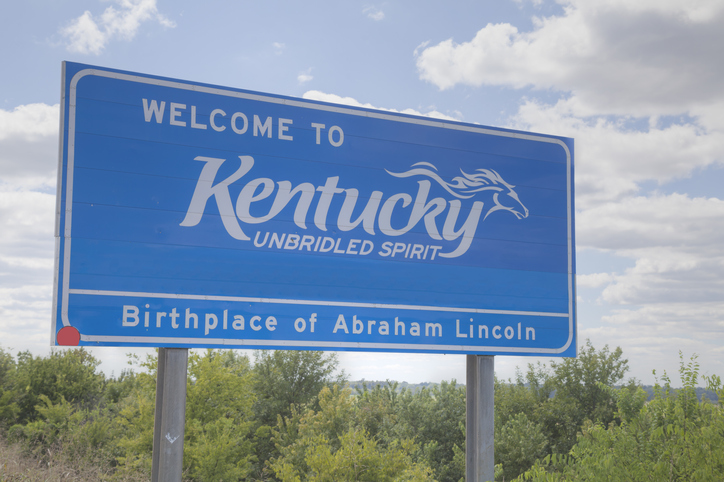
Kentucky’s private investigators work across a landscape that runs from Louisville’s corporate corridors to small towns tucked into the Appalachian foothills: insurance fraud in Frankfort, civil litigation support for Lexington law firms, workers’ compensation investigations for state agencies, and missing persons cases in Bowling Green. It’s a varied practice with a licensing process that rewards preparation.
The Kentucky Board of Licensure for Private Investigators oversees all PI licensing in the state. The exam and background check are the primary gatekeepers. No prior experience required. Here’s the full process.


Step 1. Minimum Qualifications in Kentucky
The following qualifications reflect current Kentucky statute (KRS 329A). Contact the Board or review KRS 329A directly to confirm requirements before applying, as these are subject to change.
- Must be at least 21 years old
- Be a U.S. citizen or lawful resident alien
- Be of good moral character
- No felony convictions within the past 10 years since completion of sentence
- No convictions for crimes involving dishonesty or moral turpitude within the past five years
- No misdemeanor or higher conviction for crimes involving controlled substances within the past three years
- No enrollment in a substance abuse treatment program within the past three years, as defined under state law
- No pattern of chronic or habitual use of alcohol or controlled substances, as defined under state law
- If a military veteran, they must not have been dishonorably discharged
- Meet the mental fitness standards established under KRS 329A
Step 2. Education Requirements for Kentucky Private Investigators
Kentucky’s minimum education requirement for PI licensure is a high school diploma or its equivalent: no college degree, formal training program, or prior investigative experience required. That makes Kentucky one of the more accessible states for career changers who are entering the field without a law enforcement background.
That said, relevant education does matter when you’re competing for positions with established PI firms. A degree or certificate in criminal justice, law enforcement, or a related field signals that you’re serious about the work and have the foundational knowledge to handle casework. Degrees and certificates in the following fields are available online and at schools throughout the Bluegrass State:

- Criminal Justice
- Law Enforcement
- Business
- Psychology
- Forensics
Step 3. Submitting an Application with the Kentucky Board of Licensure
All private investigators in Kentucky must hold an individual license at a minimum. Your Individual Application for Licensure requires the following fees, per 201 KAR 41:040:
| Fee Item | Amount | Notes |
|---|---|---|
| Application fee (non-refundable) | $100 | Due within 30 days of submitting your application |
| License fee | $300 | Due when you submit your passing exam score. Refunded if the Board denies your license. |
| Background check and fingerprinting | Contact Board | Processed through IdentoGo. Contact the Board or check the Board website for the current fee. |
| Exam fee | $156 | Paid directly to the testing service when you schedule your exam |
Along with the fees, your application packet must include proof of affiliation from your employing PI agency (if applicable), a certificate of $250,000 combined single-limit liability insurance — waived if you work exclusively for an attorney — and a signed release for medical and psychological records.
If you’re planning to operate as a sole proprietor or form an agency, you’ll also need to complete a Company Application for Licensure:
| Entity Type | Application Fee |
|---|---|
| Sole proprietorship | $100 |
| Firm, association, partnership, corporation, nonprofit, or institution | $400 |
Applications typically take two to three months to evaluate, though timelines can vary. Contact the Board directly for current processing estimates.
Step 4. Passing the Kentucky Private Investigator Exam
Once the Board approves your application, they’ll send you a study guide and exam scheduling information. The exam is administered by Schroeder Measurement Technologies Inc. You can get a head start by reviewing the Kentucky Revised Statutes and Administrative Regulations booklet, which covers the material the exam draws from. Expect questions covering:
- State and federal constitutional principles
- Laws governing eavesdropping, assault, search, seizure, and computer access
- Relevant court decisions bearing on investigator liability
Scores are reported on a scale of 150 to 300. The minimum passing score is 260. After passing, you’ll submit your $300 license fee to the Board (if not already paid) and receive your license. The Board issues licenses on a two-year cycle.
Step 5. Doing Business as a PI in Kentucky
Your Kentucky PI license is valid for two years. The renewal fee is a flat $250 per 201 KAR 41:040. If you file late during the July 1 to August 31 grace period, an additional $250 late fee applies on top of the standard renewal fee. Kentucky requires licensed PIs to complete 12 hours of continuing education per two-year license period. This requirement has been in place since January 1, 2021, under 201 KAR 41:070. CE hours must be directly related to the field of private investigation. Programs offered through the Kentucky Professional Investigators Association (KPIA) are pre-approved by the Board and count toward this requirement.
Most PIs in Kentucky start out working for an established investigative agency. That’s not a requirement, and you could go independent from day one, but agency work builds the casework experience and client relationships that are hard to develop on your own as a new licensee. Law enforcement and military veterans often move into independent practice more quickly given their background, but even they typically find that a year or two inside an agency makes the transition smoother.
Working as a private investigator in Kentucky without a valid license violates KRS 329A.015. Under KRS 329A.080, a first offense is a Class A misdemeanor. A second or subsequent offense escalates to a Class D felony. Keep your license current and your renewal filed before it lapses.
Kentucky has a reciprocal licensing agreement with Tennessee. If you hold a valid Tennessee PI license, contact the Kentucky Board for details on how that agreement applies to your situation. For all other states, there is no reciprocity. You’ll need to complete the full Kentucky application and exam process.
Private Investigator Salary in Kentucky
According to the Bureau of Labor Statistics, private investigators in Kentucky earned a median annual salary of $48,130 as of May 2024, with approximately 490 PIs employed across the state. The mean annual wage was $52,710. PIs in the top 10% of earners in Kentucky took home $71,260 or more per year.
Job Outlook for Private Investigators in Kentucky
Kentucky’s PI workforce is projected to grow 7.4% between 2022 and 2032, according to BLS state projections, outpacing the national average of 6% projected for the occupation between 2024 and 2034. The state averages 30 job openings per year for private investigators, a mix of new positions and vacancies left by experienced PIs who retire or move on.
PI Salaries in Louisville and Lexington
Kentucky’s two largest metro areas show a clear earnings gap. Louisville-area PIs earn substantially more on average, reflecting a larger and more established investigative services market.
| Metro Area | PIs Employed | Median Annual Salary | Annual 90th Percentile |
|---|---|---|---|
| Louisville/Jefferson County, KY-IN | 110 | $49,920 | $101,130 |
| Lexington-Fayette, KY | 40 | $45,290 | $67,250 |
Frequently Asked Questions
Does Kentucky require prior experience to get a PI license?
No. Kentucky doesn’t require prior investigative experience to apply for a license. You need to be at least 21, meet the background check criteria, carry the required insurance, and pass the state exam. That said, most PI firms won’t hire new licensees without a relevant background — law enforcement, military service, or related fieldwork carries real weight even when it’s not a legal requirement.
Does Kentucky have PI license reciprocity with other states?
Kentucky has a reciprocal agreement with Tennessee. If you hold a valid Tennessee PI license, contact the Kentucky Board of Licensure for Private Investigators for details on how that agreement applies. For all other states, there is no reciprocity. You’ll need to complete the full Kentucky application, background check, and exam process to get licensed.
Can Kentucky private investigators carry a firearm?
Carrying a firearm is optional, not required. Kentucky is a permitless carry state, so there’s no separate PI-specific firearms authorization. Some PI firms require a Concealed Deadly Weapons License (CDWL) if you carry on the job, which includes firearms training and adds a layer of professional credibility. Any firearm carried in the course of investigative work remains subject to all applicable Kentucky and federal firearms laws. Check with your employer on their specific policy before carrying.
What’s the penalty for practicing as a PI without a license in Kentucky?
Operating as a private investigator in Kentucky without a valid license violates KRS 329A.015. Under KRS 329A.080, a first offense is a Class A misdemeanor. A second or subsequent offense escalates to a Class D felony. The stakes are serious and get more serious with each violation. Keep your license current.
How long does it take to get a Kentucky PI license?
Applications typically take two to three months to process once submitted, and that’s before you schedule the exam. From the time you send in your paperwork to when you have a license in hand, plan for three to four months as a general estimate. Contact the Board for current processing times, and have all your documentation ready upfront: insurance certificate, notarized application, and background check materials. Having everything in order is the most reliable way to avoid delays.
Key Takeaways
- No experience required: Kentucky doesn’t require prior investigative experience for licensure. Meet the background check criteria, pass the exam, and you’re eligible to apply.
- Budget at least $556 in fees before licensing: The application requires a $100 non-refundable fee, a $300 license fee (refunded if denied), and a $156 exam fee paid to the testing service. Background checks and fingerprinting costs are additional. Contact the Board for the current amount.
- 12 hours of CE required per renewal: Since January 2021, Kentucky requires 12 hours of continuing education per two-year license period. The renewal fee is a flat $250. KPIA programs count toward the CE requirement.
- Reciprocity with Tennessee only: Kentucky has one reciprocal agreement, with Tennessee. For all other states, the full licensing process applies.
- Median salary of $48,130 statewide in 2024: Louisville-area PIs earned a median of $49,920, with the top 10% reaching $101,130. Kentucky’s PI workforce is projected to grow 7.4% through 2032.
Ready to take the first step toward your Kentucky PI license? Browse criminal justice and investigative programs in Kentucky and find schools that can help build the background that makes your application stand out.
May 2024 US Bureau of Labor Statistics salary and job market figures for Private Detectives and Investigators reflect state and national data, not school-specific information. Conditions in your area may vary. Data accessed May 2026.